
The rise of AI-enabled ERPs and automation platforms is reshaping the market, offering mid-market solutions that promise efficiency without the traditional complexity. Yet, the challenge remains: how to integrate these technologies seamlessly into existing operations.
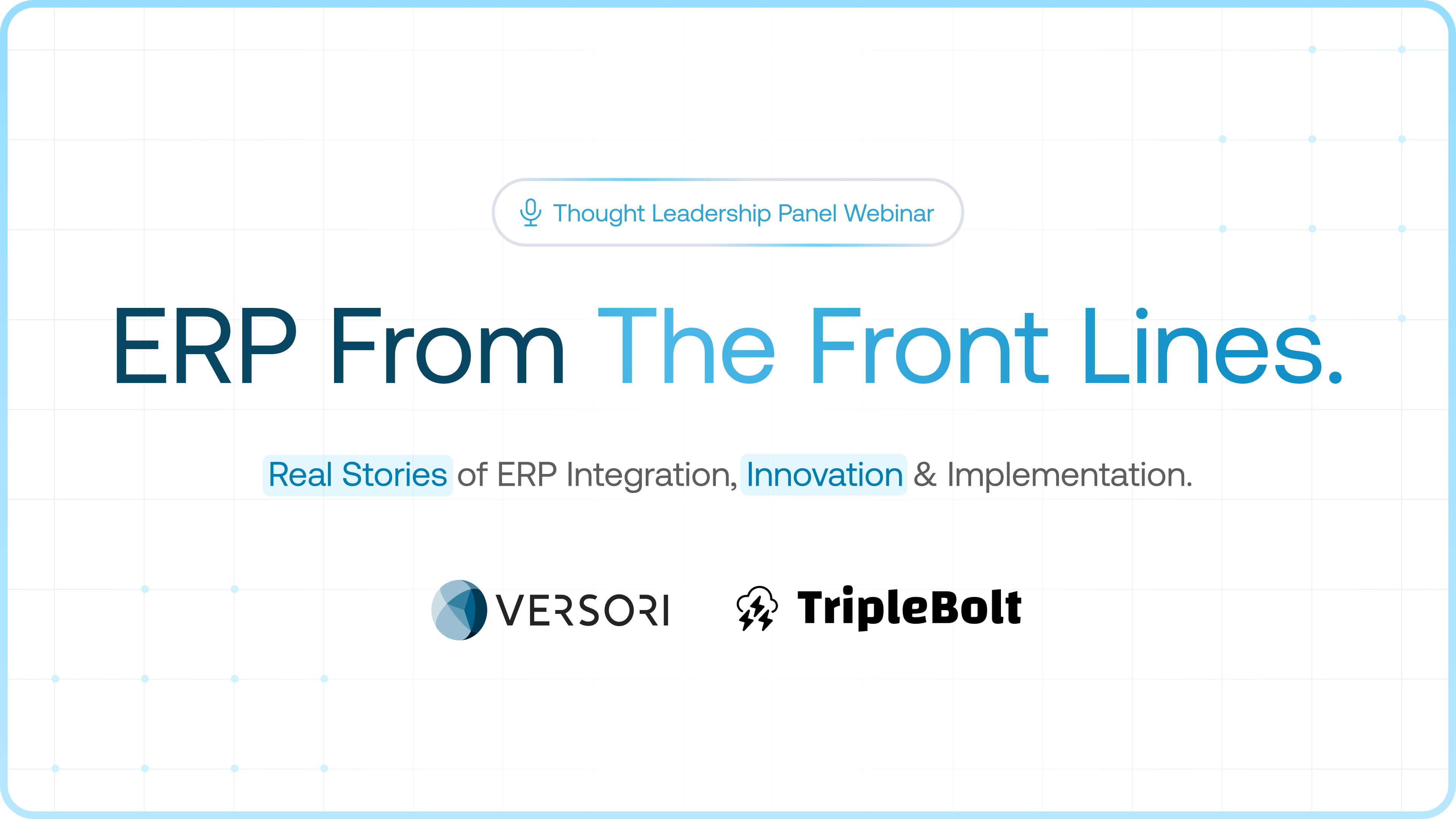
Enterprise Resource Planning (ERP) systems have long been the backbone of organisational efficiency, serving as the central hub for data and process management. However, the landscape of ERP systems is rapidly evolving, driven by technological advancements and changing business needs. This article delves into the current state of ERP systems, the challenges faced during implementations, and the future trajectory of AI-enabled ERPs.
Versori recently hosted an ERP thought leadership panel, to draw back the curtain on the real challenges and success stories of ERP implementation projects.
Erin Barton, VP of Tech at TripleBolt.io, on managing complex ERP projects and avoiding common pitfalls.
Will Jackson, COO at Versori, on how improved data connectivity turns ERP from a back-office tool into a growth engine.
George Goodfellow, Head of Growth at Versori, on how ERP and integration strategies directly impact scalability, customer experience, and long-term commercial success.
The decision to implement an ERP system is not solely dependent on the size of a business. Instead, it hinges on the complexity of operations and the need for streamlined communication and data management. Smaller companies might find themselves in greater need of an ERP due to increasing regulatory demands and the necessity for accurate reporting. The key is recognising when the lack of a unified data entry and exit point is hindering growth.
The market has seen a surge in mid-market solutions and AI-enabled ERPs, offering alternatives to traditional systems. These new entrants aim to automate processes and reduce the complexity associated with ERP implementations. However, the integration of these systems requires a deep understanding of diverse SaaS products and the ability to adapt to various business functions.
ERP implementations are notorious for exceeding budgets and timelines. This is often due to a lack of understanding of the company's future needs and the assumption that a one-size-fits-all solution will suffice. Successful implementations require a clear mapping of current processes and future goals, along with a willingness to embrace a diverse ecosystem of software solutions.
AI is increasingly being integrated into ERP systems, offering the potential for significant efficiency gains. However, the adoption of AI must be approached with caution, ensuring that it is used as an accelerant rather than a replacement for sound business processes. Companies must focus on real use cases that drive business value rather than adopting AI for its novelty.
Despite the rise of technology, the role of consultants remains crucial. They provide the external perspective needed to challenge internal assumptions and guide companies through the complex landscape of ERP transformations. The emphasis is on building a technology solution that aligns with the company's strategic goals and future aspirations.
In conclusion, ERP systems remain a critical component of enterprise operations, but their implementation and evolution require careful planning and execution. By understanding the challenges and opportunities presented by AI and other technological advancements, organizations can better position themselves for success in the ever-evolving business landscape.
